Finding Your Brand Voice: A Practical Guide to Messaging That Connects
Your logo catches attention, but your voice builds relationships. A step-by-step guide to developing brand messaging that resonates with your ideal customers.
Your logo might get someone's attention, but your voice is what keeps them listening. After 15 years building brands—from healthcare systems to fishing tackle companies—I've seen businesses invest thousands in visual identity only to undermine it with inconsistent, forgettable messaging.
A great logo with weak messaging is like a beautifully designed restaurant with terrible service. First impressions matter, but the experience is what builds loyalty.
Here's how to develop a brand voice that actually connects with your audience.
What Is Brand Voice (And Why Does It Matter)?
Brand voice is the consistent personality that comes through in all your communication—website copy, social media posts, emails, even how your team answers the phone. It's not what you say, but how you say it.
Think of it this way: If your brand walked into a room and started talking, what would they sound like? Confident and direct? Warm and approachable? Technical and precise?
Voice vs. Tone: The Important Distinction
Your voice stays consistent—it's your brand's personality. Your tone adjusts based on context, just like a real person.
Example: A healthcare brand might have a voice that's "knowledgeable, caring, and reassuring." But the tone shifts:
- Website homepage: Confident and welcoming
- Appointment reminder email: Friendly and practical
- Emergency information: Calm but urgent
The personality stays the same; the delivery adapts to the situation.
The Cost of Voice Inconsistency
When your messaging is inconsistent, customers notice—even if they can't articulate why. They feel confused, disconnected, or unsure whether they're dealing with the same company.
I worked with a local restaurant that had warm, personal messaging on their website ("Welcome to our family table") but cold, corporate language in their emails ("Your reservation has been processed"). Customers felt the disconnect. Fixing that inconsistency increased their repeat booking rate by 23%.
The Four Pillars of Brand Voice
Every effective brand voice rests on four foundations:
1. Personality
These are the human traits your brand embodies. Not what you do, but who you are.
Discovery Exercise: If your brand was a person at a networking event, how would others describe them after a conversation?
- Confident or humble?
- Serious or playful?
- Formal or casual?
- Traditional or innovative?
Real Example: When I developed messaging for Rumble Fish Tackle & Lure, their personality words were "bold, competitive, and no-nonsense." Their tagline "Fresh & Salty" works on multiple levels—it describes their lures (freshwater and saltwater) while capturing the brand's attitude. Every piece of content had to pass the test: Would a serious angler respect this?
Compare that to a family restaurant where the personality might be "warm, welcoming, and unpretentious."
2. Tone Range
Your voice stays consistent, but tone flexes based on:
- Context: Celebrating a customer vs. addressing a complaint
- Channel: LinkedIn post vs. Instagram story
- Audience segment: New prospect vs. loyal customer
- Content type: Sales page vs. support documentation
Document your range: Create a scale from most formal to most casual, and identify where different content types fall.
3. Language Choices
The specific words you use (and avoid) define your voice:
Vocabulary Level
- Simple and accessible vs. sophisticated and precise
- Industry jargon vs. plain language
- Short sentences vs. complex structures
Word Preferences
- "Buy" vs. "Invest" vs. "Get started"
- "Customers" vs. "Clients" vs. "Partners"
- "We" vs. "Our team" vs. company name
What to Avoid
- Clichés your competitors overuse
- Jargon your audience doesn't know
- Words that don't match your personality
Real Example: For TidalHealth's SharePoint portal, we avoided corporate buzzwords ("synergy," "leverage," "circle back") and used clear, direct language. Healthcare workers are busy—they needed information, not fluff.
4. Purpose
What do you want your communication to achieve beyond the immediate message?
- Build trust and credibility?
- Create emotional connection?
- Demonstrate expertise?
- Inspire action?
- Simplify complexity?
Your purpose shapes every word choice. A brand focused on trust sounds different from one focused on excitement.
Developing Your Brand Voice: A Step-by-Step Process
Step 1: Audit Your Existing Content
Before creating something new, understand what you already have.
Collect samples from:
- Website pages (especially About and Services)
- Email campaigns
- Social media posts
- Sales materials
- Customer service responses
Analyze for:
- Consistent patterns (good)
- Contradictions (problem areas)
- What feels authentically "you"
- What feels forced or generic
Common finding: Most businesses discover they have multiple voices—usually because different people wrote different content without guidelines.
Step 2: Define Your Audience Deeply
Your voice should resonate with specific people, not everyone.
Answer these questions:
- Who are your ideal customers (demographics and psychographics)?
- What language do they use to describe their problems?
- What do they value most?
- What turns them off?
- Where do they consume content?
Go beyond basics: Don't just say "small business owners." Describe them: "Local service business owners in their 40s-50s who are good at their craft but frustrated by marketing. They value straight talk and proven results over trendy tactics."
Step 3: Choose Your Personality Traits
Select 3-5 core traits that define your brand's personality.
Framework for selection:
- What you genuinely are (authentic traits)
- What your audience needs (relevant traits)
- What competitors aren't (differentiating traits)
Example trait sets:
| Business Type | Personality Traits |
|---|---|
| Law firm | Authoritative, Approachable, Thorough |
| Surf shop | Laid-back, Authentic, Stoked |
| IT services | Reliable, Clear, Proactive |
| Boutique bakery | Artisan, Warm, Passionate |
Test your traits: Can you actually deliver on these consistently? Don't claim "innovative" if you're a traditional business. Authenticity matters.
Step 4: Write Your Voice Guidelines
Document your voice so anyone can apply it consistently.
Include:
Voice Description (2-3 sentences)
"We communicate like a knowledgeable friend who happens to be an expert. We're confident but never condescending, thorough but never overwhelming. We explain complex topics in accessible language without dumbing things down."
Personality Traits with Explanations For each trait, explain what it means in practice:
Confident: We state our expertise directly without hedging. We say "This works" not "This might possibly work."
Approachable: We avoid jargon and insider language. We write like we talk.
Thorough: We anticipate questions and address them proactively. We don't leave gaps.
Do's and Don'ts
| Do | Don't |
|---|---|
| Use "you" and "your" | Overuse "we" and "our" |
| Write in active voice | Use passive constructions |
| Be specific and concrete | Be vague and generic |
| Use contractions naturally | Sound stiff and formal |
Word List
| Use | Instead of |
|---|---|
| Help | Facilitate |
| Use | Utilize |
| Start | Commence |
| About | Approximately |
Step 5: Create Example Content
Abstract guidelines only go so far. Show your voice in action.
Write sample versions of:
- Homepage headline and intro
- Service description paragraph
- Email subject lines and opening
- Social media post
- Error message or apology
- Thank you message
Before/After Examples:
Generic:
"We provide comprehensive digital marketing solutions designed to help businesses achieve their goals."
With voice (confident, clear, results-focused):
"We help local businesses get found online and turn visitors into customers. No jargon, no vanity metrics—just marketing that actually works."
Step 6: Test and Refine
Your voice should feel natural, not forced.
Testing methods:
- Read content aloud—does it sound like a real person?
- Show to trusted customers—does it resonate?
- Have team members write with guidelines—is it consistent?
- A/B test different approaches—what performs better?
Refinement is ongoing: Your voice may evolve as your business grows and your audience changes. Review guidelines annually.
Brand Messaging Framework
Voice is how you say things. Messaging is what you say. Both need to work together.
Core Message (Value Proposition)
One clear statement of what you do, for whom, and why it matters.
Formula:
We help [specific audience] [achieve specific outcome] through [your unique approach].
Example:
We help Ocean City businesses attract more customers online through websites and marketing that actually perform—not just look pretty.
Tagline
A memorable phrase that captures your brand essence.
Effective tagline characteristics:
- Short (under 7 words)
- Memorable and distinctive
- Communicates benefit or personality
- Works standalone and with logo
Testing question: If someone only saw your tagline, would they understand what makes you different?
Key Messages by Audience
Different audiences need different emphasis.
Example for a web design agency:
| Audience | Key Message |
|---|---|
| New businesses | "Launch with a website that's ready to grow with you." |
| Established businesses | "Finally get a website that matches the quality of your work." |
| E-commerce | "Stop losing sales to a clunky checkout process." |
Elevator Pitch
30 seconds to explain what you do.
Structure:
- Who you help (1 sentence)
- What problem you solve (1 sentence)
- How you're different (1 sentence)
- Proof or credibility (1 sentence)
Example:
"I help local businesses in Ocean City and the Mid-Atlantic get websites that actually bring in customers. Most small business websites look fine but don't perform—they're slow, hard to find on Google, and don't convert visitors. I build sites on modern technology that loads fast, ranks well, and turns visitors into leads. I've helped restaurants increase online orders by 45% and service businesses double their website leads."
Applying Voice Across Channels
Your voice should be recognizable everywhere while adapting to platform norms.
Website Copy
Your most controlled environment—set the standard here.
Homepage: Lead with personality. This is your first impression. About page: Most personal—let humanity show through. Services: Balance personality with clarity—people need information. Contact: Warm and inviting—reduce friction.
Social Media
Same voice, adjusted for platform culture.
LinkedIn: More professional, thought leadership focus Facebook: Conversational, community-oriented Instagram: Visual-first, personality-forward Twitter/X: Concise, real-time, opinionated
Consistency check: Would someone recognize your brand if they saw a post without your logo?
Email Marketing
Direct communication—personality matters most here.
Subject lines: Match your voice (playful brand = playful subjects) Opening: Talk to one person, not a list Body: Value-first, authentic personality Sign-off: Consistent, personal
Customer Service
Where voice matters most—customers remember how you made them feel.
Guidelines:
- Acknowledge emotions before solving problems
- Use customer's name and specific details
- Match their energy level (don't be cheerful to angry customers)
- End with personality, not corporate speak
Common Brand Voice Mistakes
Mistake 1: Sounding Like Everyone Else
The problem: Using the same phrases every competitor uses.
- "We're passionate about..."
- "Best-in-class solutions"
- "Your partner in success"
- "Committed to excellence"
The fix: Write your message, then search if competitors say the same thing. If they do, rewrite it.
Mistake 2: Inconsistency Across Touchpoints
The problem: Professional on website, chaotic on social, robotic in emails.
The fix: One voice document that everyone uses. Regular audits of all content.
Mistake 3: Too Formal or Too Casual
The problem: Erring too far in either direction for your audience.
- Too formal sounds distant and corporate
- Too casual can seem unprofessional or try-hard
The fix: Match your actual customers. Listen to how they talk. Meet them where they are.
Mistake 4: Jargon Overload
The problem: Using insider language your audience doesn't understand.
The fix: Have someone outside your industry read your content. If they're confused, simplify.
Mistake 5: Focusing on Yourself
The problem: "We" and "Our" everywhere, "You" nowhere.
The fix: Flip the perspective. Talk about customer outcomes, not your processes.
Documenting Your Voice for Your Team
A voice guide only works if people use it.
What to Include
- Quick reference (1 page): Personality traits, key do's and don'ts
- Full guidelines (5-10 pages): Complete voice documentation
- Example library: Sample content for different situations
- Templates: Starting points for common content types
Making It Usable
- Store where everyone can access it
- Include in onboarding for new team members
- Reference in content reviews
- Update when voice evolves
Training Your Team
- Walk through guidelines together
- Practice writing in the voice
- Review real content and discuss what works
- Create a feedback loop for questions
Putting It All Together
Your brand voice is the personality that brings your visual identity to life. It's what makes customers feel like they know you—like they're working with real people, not a faceless company.
The key points:
- Voice is consistent; tone adapts to context and situation
- Four pillars: Personality, tone range, language choices, and purpose
- Development takes work: Audit, define audience, choose traits, document, test
- Apply everywhere: Website, social, email, customer service
- Document and train: Make guidelines accessible and usable
A strong brand voice won't save a bad product, but it will help a good business connect with the right customers. It builds recognition, trust, and loyalty that generic messaging never can.
Need Help Finding Your Voice?
Developing brand voice and messaging is part of my brand identity work. Whether you're starting fresh or refining what you have, I can help you find the words that connect with your audience.
Get a Free Brand Strategy Quote
Building a brand that connects starts with understanding your audience and expressing your authentic personality. If you're ready to develop messaging that resonates, let's talk.
Tags

About Kevin Wolff
Kevin is a web developer and digital strategist based in Ocean City, MD. He specializes in creating modern websites, SharePoint solutions, and digital marketing strategies that help businesses grow online.
Free: AI Readiness Checklist
Subscribe and instantly download our 15-question checklist to discover where AI automation can save you time and grow your business.
Related Articles
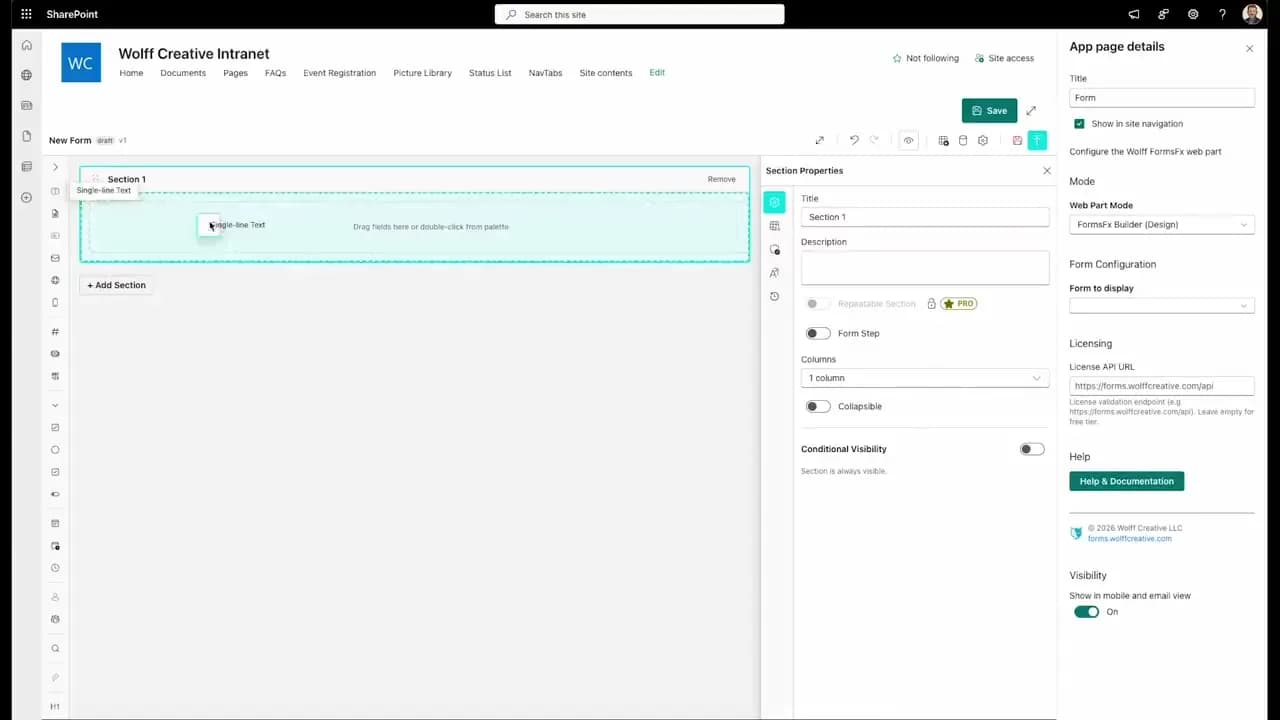
FormsFx: A Drag-and-Drop SharePoint Form Builder with Rules, Formulas, and Cascading Dropdowns
We built a SharePoint form builder that does what InfoPath did — conditional logic, calculated fields, cascading dropdowns — but runs natively as an SPFx web part. Here's how it works under the hood.
Read More →
FormsFx Has a Built-In Submissions Dashboard — Here's Why That Matters
Most SharePoint form builders stop at form submission. FormsFx includes a full dashboard for managing, searching, filtering, exporting, and approving submissions — no Power BI or custom views required.
Read More →
Offline Forms, Webhook Signatures, and Enterprise Connectors — FormsFx Beyond SharePoint Lists
FormsFx doesn't just write to SharePoint lists. It supports offline submission queuing, HMAC-signed webhooks for Power Automate, and enterprise connectors for SQL Server, Dataverse, REST APIs, and Azure Service Bus.
Read More →Need Help With This?
I help Eastern Shore businesses with web development, marketing, and AI automation. Let's talk about your project.
Need Help With Your Project?
Ready to take your business to the next level? Let's discuss how I can help.