What Google Really Wants in 2026: A Practical Guide for Small Businesses (With Real Examples From Ocean City)
Google has changed dramatically. After working with dozens of local businesses in Ocean City, I've tracked exactly what Google rewards in 2026. Here's what works—in plain English, no jargon.
Most small businesses feel like Google changes its rules every few months.
The truth is: Google has changed — a lot — but in a very clear direction.
After working with dozens of local and seasonal businesses (including many in Ocean City, Maryland, which survives almost entirely on search visibility), I've been able to track exactly what Google is rewarding as we head into 2026.
So here it is — plain English, no jargon:
What Google Wants in 2026.
1. Fast Websites — and Not "Pretty Fast." Really Fast.
Google's Core Web Vitals are tightening again.
In 2026, Google prioritizes websites that load instantly, especially on mobile.
Key Metrics:
- LCP (Largest Contentful Paint) — largest item loads quickly
- INP (Interaction to Next Paint) — page responds instantly when tapped
- CLS (Cumulative Layout Shift) — layout doesn't jump around
📌 Example from Ocean City:
When we improved performance for an OC restaurant, the Lighthouse mobile score went from 34 → 95, and their organic bookings increased noticeably in less than 60 days.
The takeaway: Speed isn't optional. It's foundational.
2. Mobile-First Experience (Because Everyone Searches on Their Phone)
Across all industries — not just tourism — Google now expects sites to feel like mobile apps:
- ✅ Clear buttons
- ✅ Simple menus
- ✅ Readable text
- ✅ Fast loading
- ✅ Thumb-friendly design
📌 Real Data from OC Clients:
For most restaurants and rental companies, 80–85% of traffic is mobile.
But this pattern is now showing up everywhere:
- Contractors
- Real estate
- Gyms
- Retail stores
- Service businesses
Google rewards sites that respect mobile-first behavior.
3. Helpful, Human Content — Not AI Fluff
Google is aggressively filtering out generic or unhelpful content, especially AI-generated paragraphs that lack real experience.
In 2026, Google Wants:
- ✅ Clear answers
- ✅ Real examples
- ✅ Expertise
- ✅ Specifics
- ✅ Content written for humans, not bots
📌 Example:
A "Best Family Restaurants in OC" guide outperforming generic pages because it includes:
- Specific streets
- Real menu items
- Local landmarks
- Firsthand experience
This applies to every industry:
- Accountants
- Contractors
- Medical practices
- Ecommerce stores
- Photographers
Useful content beats generic content every time.
4. Google Gemini Integration (New for 2025–2026)
This is huge.
Gemini is now built directly into:
- Chrome
- Search
- Google Business Profile
- Maps
- Android
How Gemini Reads Your Site:
Gemini analyzes your page to:
- Summarize it
- Pull key details
- Answer user questions
- Provide recommendations
To Appear in AI-Powered Summaries, You Need:
- Clear headings
- Structured content
- FAQs
- Updated information
- Strong mobile UX
📌 Example:
A rental company in OC saw Gemini highlight their "beach gear delivery" because it was clearly labeled on the site — while competitors buried it.
5. SGE (Search Generative Experience) Changes HOW People Search
Instead of searching:
"roof repair OCMD"
People now ask:
"Who's the best roofing company near me that actually answers the phone?"
SGE Rewards:
- Clear service pages
- Problem-solving content
- FAQs
- Location-specific language
This applies everywhere — not just at the beach.
6. Strong Local Signals (Google Business Profile Matters More)
Google now blends your website + your Google Business Profile (GBP).
Gemini actually reads GBP content.
Google Rewards:
- ✅ Updated hours
- ✅ Current photos
- ✅ Recent reviews
- ✅ Accurate categories
- ✅ Service descriptions
- ✅ Menus & amenities
📌 Example:
An OC restaurant gained visibility simply by posting new photos weekly and rewriting their menu descriptions.
If you're a local business, GBP is half your SEO.
7. Accessibility & Inclusivity (Now a Soft Ranking Factor)
Google correlates accessible websites with:
- Better UX
- Lower bounce rates
- More satisfied users
This Means:
- Alt text on images
- High contrast
- Readable fonts
- Keyboard-friendly navigation
- Proper form labels
📌 Example:
One OC attraction saw immediate improvement in engagement after button sizes and contrast were adjusted for accessibility.
This matters in every industry.
8. Structured Data (Schema) For AI Search
Gemini and SGE rely heavily on structured data:
- Services
- FAQs
- Products
- Events
- Menus
- Local business details
This is how AI understands who you are and why you matter.
Every small business should have schema in 2026 — period.
9. Fresh, Updated Content (Stale Content Doesn't Rank)
Google now prioritizes recency more strongly:
- New pages
- Updated service descriptions
- Updated menus
- Updated pricing
- Updated hours
- New photos
- Fresh blog posts
📌 OC Example:
Businesses who updated their 2025–2026 content early (before spring) got more early bookings simply because Google treated them as active.
Final Summary: What Google Wants in 2026
Let's make it simple:
Google Wants Websites That Are:
- ⚡ Fast
- 📱 Mobile-friendly
- 💬 Helpful
- 👤 Human
- 🤖 Easy to summarize
- 🆕 Fresh
- 📊 Structured
- 📍 Locally accurate
- ♿ Accessible
- ✨ Clear
And it wants businesses who show real experience — not AI fluff.
Want Your Site Ready for Google's 2026 Standards?
I help small businesses build modern, fast, AI-ready websites that Google (and customers) love.
What I Can Help With:
- Core Web Vitals optimization
- Mobile-first redesigns
- Gemini & SGE optimization
- Structured data implementation
- Local SEO strategy
- Content that converts
Written by: Kevin Wolff, Founder of Wolff Creative
Web development and digital strategy for small businesses. 15+ years helping local businesses succeed in search, with real-world experience from Ocean City's competitive tourism market.
Tags

About Kevin Wolff
Kevin is a web developer and digital strategist based in Ocean City, MD. He specializes in creating modern websites, SharePoint solutions, and digital marketing strategies that help businesses grow online.
Free: AI Readiness Checklist
Subscribe and instantly download our 15-question checklist to discover where AI automation can save you time and grow your business.
Related Articles
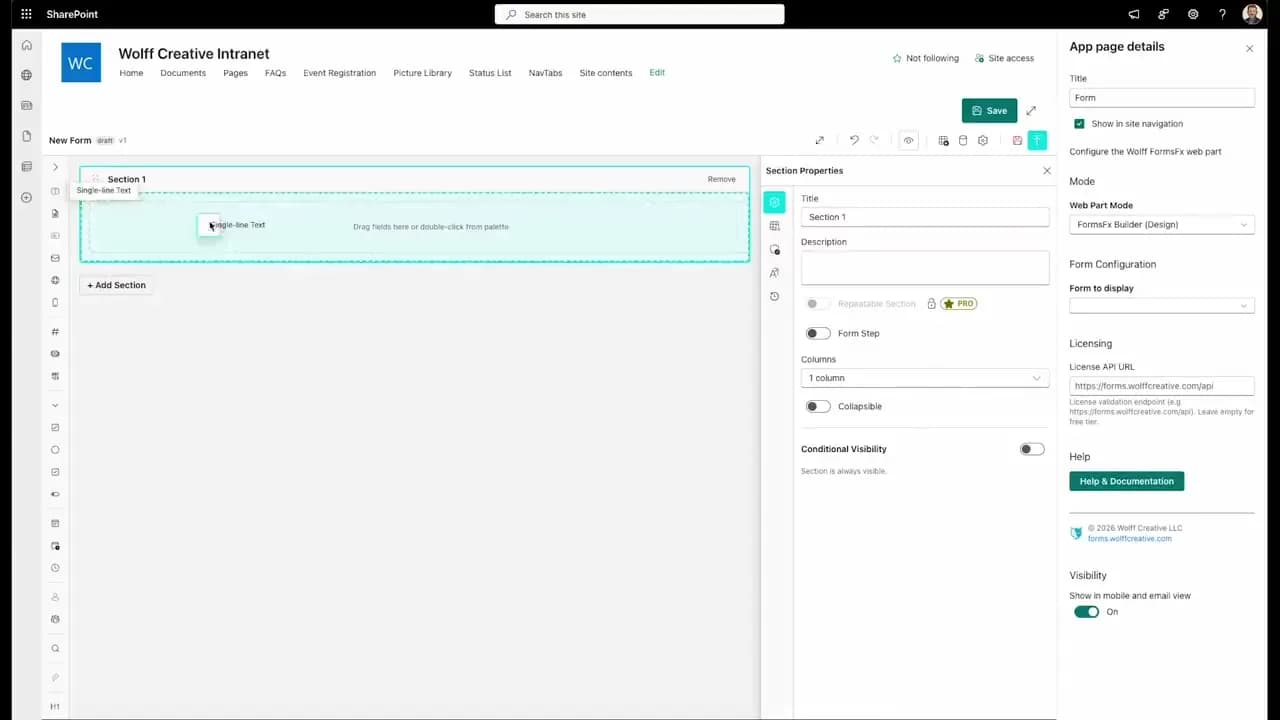
FormsFx: A Drag-and-Drop SharePoint Form Builder with Rules, Formulas, and Cascading Dropdowns
We built a SharePoint form builder that does what InfoPath did — conditional logic, calculated fields, cascading dropdowns — but runs natively as an SPFx web part. Here's how it works under the hood.
Read More →
FormsFx Has a Built-In Submissions Dashboard — Here's Why That Matters
Most SharePoint form builders stop at form submission. FormsFx includes a full dashboard for managing, searching, filtering, exporting, and approving submissions — no Power BI or custom views required.
Read More →
Offline Forms, Webhook Signatures, and Enterprise Connectors — FormsFx Beyond SharePoint Lists
FormsFx doesn't just write to SharePoint lists. It supports offline submission queuing, HMAC-signed webhooks for Power Automate, and enterprise connectors for SQL Server, Dataverse, REST APIs, and Azure Service Bus.
Read More →Need Help With This?
I help Eastern Shore businesses with web development, marketing, and AI automation. Let's talk about your project.
Need Help With Your Project?
Ready to take your business to the next level? Let's discuss how I can help.