Why Posting Every Day Is Hurting Your Business
The 'post every day' advice is outdated and counterproductive. Here's why quality beats quantity on social media in 2026—and what to do instead.
For years, the social media advice was clear: post every day. Stay in the algorithm. More content equals more visibility equals more customers.
That advice is now actively hurting businesses.
Here's what's actually happening in 2026: audiences are burned out, algorithms have evolved, and the businesses posting the most are often getting the worst results. Meanwhile, brands posting 2-3 times per week with genuinely useful content are building real engagement.
I post three times a week. Monday, Wednesday, Friday. That's it. And it works better than when I tried to post daily. Let me explain why—and why you should probably do the same.
The Daily Posting Trap
The pressure to post daily comes from a few places:
Old algorithm logic: Early social media algorithms did reward frequency. More posts meant more chances to appear in feeds. That's changed.
Marketing guru advice: "Gurus" who need content to sell courses kept pushing daily posting because it sounds productive and measurable.
Fear of being forgotten: Business owners worry that if they're not constantly visible, customers will forget them.
Competitor pressure: "My competitor posts twice a day—I need to keep up!"
Here's what actually happens when you try to post every day:
1. Quality Crashes
There's only so much genuinely valuable content in any business. When you force yourself to post daily, you start scraping the bottom of the barrel. Day 1 might be insightful. Day 5 is filler. Day 15 is "Happy National Donut Day!" with a stock photo.
Your audience notices. They start scrolling past your posts without engaging. The algorithm notices that too.
2. You Burn Out
Sustainable marketing matters more than intense bursts. I've watched business owners start January with "I'm posting every day this year!" enthusiasm, only to go completely silent by March.
Three months of daily posting followed by nine months of nothing is worse than consistent weekly posting all year.
3. You Train Your Audience to Ignore You
When most of your posts are filler, people learn to scroll past without looking. You're not building engagement—you're building blindness to your content.
4. The Algorithm Actually Punishes Low Engagement
Here's the part most people miss: modern algorithms care about engagement rate, not just total posts. If you post 7 times and get 10 engagements, that's worse than posting 3 times and getting 15 engagements.
Low-performing posts drag down your overall reach. Every mediocre post teaches the algorithm that your content isn't worth showing.
What the Data Actually Shows
The research is clear, and it's not what the daily-posting crowd wants to hear.
Social media burnout is real: Studies show users—especially Gen Z—are spending less time on social platforms and being more selective about what they engage with. The scroll is faster. The bar is higher.
Quality signals matter more: Platform algorithms have gotten sophisticated. They're measuring saves, shares, comments, and time spent—not just likes. Content that provides genuine value outperforms frequent fluff.
Diminishing returns kick in fast: For most small businesses, engagement per post drops significantly after 3-4 posts per week. You're spending more time for less impact.
Audiences prefer less, better content: When surveyed, social media users consistently say they'd rather follow accounts that post less frequently but with higher quality content.
The Quality-First Alternative
Here's what actually works in 2026:
Post 2-4 Times Per Week
For most small businesses, this is the sweet spot. Enough to stay visible, not so much that you're scrambling for content.
My schedule:
- Monday: Start the week with something valuable
- Wednesday: Mid-week engagement
- Friday: End the week with something useful or entertaining
That's it. Three posts per week, every week, consistently. It's sustainable, it's manageable, and it performs better than daily posting ever did.
Make Every Post Count
Before posting, ask:
- Would I engage with this if I saw it from someone else?
- Does this provide value, entertainment, or genuine connection?
- Is this the best I can do, or am I just filling a slot?
If a post doesn't pass these tests, don't publish it. An empty day is better than a post that trains people to ignore you.
Focus on Depth Over Breadth
Instead of 7 shallow posts, create 2-3 posts with real substance:
Shallow (what daily posting produces):
"Happy Monday! What are your goals this week? 💪"
Substantial (what quality-first produces):
"Three things I learned from last week's project that every small business owner should know: [actual insights with specific details]"
The first post gets scrolled past. The second gets saved and shared.
Batch Create for Consistency
The secret to consistent quality isn't working harder—it's working smarter.
Set aside 2-3 hours once a week to create all your content. When you're in creative mode, you produce better work than when you're scrambling at 4pm to find something to post.
My process:
- Friday afternoon: Review what worked this week, note ideas for next week
- Weekend: Create next week's content in one focused session
- Monday/Wednesday/Friday: Post pre-created content, engage with responses
This approach produces better content with less total time invested than daily creation.
"But What About the Algorithm?"
Let's address this directly, because it's the main objection.
Modern algorithms reward engagement, not frequency. A post that gets strong engagement will be shown to more people than three posts that get weak engagement.
Consistency matters more than frequency. Algorithms favor accounts that post reliably. Three posts every week for a year beats daily posting for two months then disappearing.
Different platforms, different rules:
- Instagram: Rewards saves and shares heavily. One great post beats five mediocre ones.
- Facebook: Prioritizes meaningful interactions. Comments matter more than likes.
- LinkedIn: Longer-form, thoughtful content outperforms frequent short posts.
- TikTok/Reels: Yes, more content can help here—but only if each video is genuinely good.
What to Post When You're Posting Less
When every post matters, you need a content framework. Here's what works:
The Value Mix
40% Educational/Valuable Content
- Tips your audience can use
- Insights from your expertise
- Answers to common questions
- Behind-the-scenes of your process
30% Personality/Connection
- Your perspective on industry topics
- Stories from your business
- Team highlights
- Genuine moments (not staged "authenticity")
20% Promotional
- Your services and offers
- Case studies and results
- Calls to action
- Client success stories
10% Engagement/Community
- Questions that spark real conversation
- Responses to trends (only if relevant)
- Community highlights
- User-generated content
Content That Earns Engagement
Focus on content types that naturally generate meaningful interaction:
Teaches something specific: "Three mistakes I see in every [your industry] website—and how to fix them"
Shares genuine insight: "After 15 years in this business, here's what I wish I'd known on day one"
Tells a real story: "Last week, a client asked me [question]. Here's what happened..."
Takes a clear position: "Unpopular opinion: [your genuine, defensible take on an industry topic]"
Shows real results: "Before and after from last month's project. Here's what we changed and why it worked."
Content to Stop Creating
Generic motivation: "Believe in yourself! You've got this! 🙌"
Holiday filler: "Happy National [Whatever] Day!" (unless directly relevant to your business)
Engagement bait: "Like if you agree! Comment your favorite emoji!"
Repurposed content with no added value: Sharing an article with just "Great read!" adds nothing.
AI-generated fluff: If you used AI to generate it and didn't add anything unique, skip it.
The Exception: When More Posting Makes Sense
To be fair, there are situations where higher frequency works:
You're building a new account: The first few months of a new presence might benefit from higher frequency to establish momentum.
You have a content team: If you have dedicated resources for content creation, you can maintain quality at higher volumes.
You're in a content-first business: Media companies, influencers, and content creators operate differently than service businesses.
You've found a format that works: If you've genuinely found a repeatable format that consistently performs, you can scale it.
You're running a specific campaign: Short-term pushes (product launch, event promotion) might warrant temporary frequency increases.
But for most small businesses? 2-4 quality posts per week is plenty.
Making the Switch
If you're currently posting daily and want to shift to quality-first:
Week 1: Audit Your Content
Look at your last 30 posts. Which ones actually got engagement? Which ones fell flat? You'll probably notice a pattern—your best posts aren't the most frequent; they're the most valuable.
Week 2: Plan Your New Schedule
Pick your posting days. For most businesses, Monday/Wednesday/Friday or Tuesday/Thursday works well. Put it on your calendar.
Week 3: Create a Content Bank
Instead of creating content daily, spend one session creating a week's worth of posts. Focus on quality over speed.
Week 4: Commit and Track
Stick to your new schedule and track engagement per post—not just total engagement. You'll likely see engagement rates improve even as total posts decrease.
Ongoing: Resist the Pressure
You'll feel the pull to post more. Resist it. Every time you're tempted to post something mediocre just to "stay active," remember: that mediocre post is training your audience to ignore you.
The Real Measure of Success
Stop measuring success by posts published. Start measuring by:
Engagement rate: Engagements divided by reach. Are people who see your content interacting with it?
Meaningful interactions: Comments, saves, shares—not just likes. Are people finding your content valuable enough to act on?
Follower quality: Are you attracting your ideal customers or just random accounts?
Business results: Is social media actually driving leads, sales, or relationships? That's what matters.
A account with 1,000 engaged followers who regularly become customers is more valuable than 10,000 followers who scroll past everything.
The Bottom Line
The "post every day" era is over. In 2026, audiences are overwhelmed, algorithms reward engagement over frequency, and quality is the only sustainable competitive advantage.
Post less. Post better. Show up consistently with content that actually serves your audience.
Three great posts per week will outperform seven mediocre ones every time. Your audience will appreciate it, the algorithms will reward it, and you'll actually be able to sustain it.
Stop chasing the algorithm with quantity. Start building real engagement with quality.
Need help developing a sustainable content strategy that actually works? Let's talk about your social media approach—quality over quantity, always.
Tags

About Kevin Wolff
Kevin is a web developer and digital strategist based in Ocean City, MD. He specializes in creating modern websites, SharePoint solutions, and digital marketing strategies that help businesses grow online.
Free: AI Readiness Checklist
Subscribe and instantly download our 15-question checklist to discover where AI automation can save you time and grow your business.
Related Articles
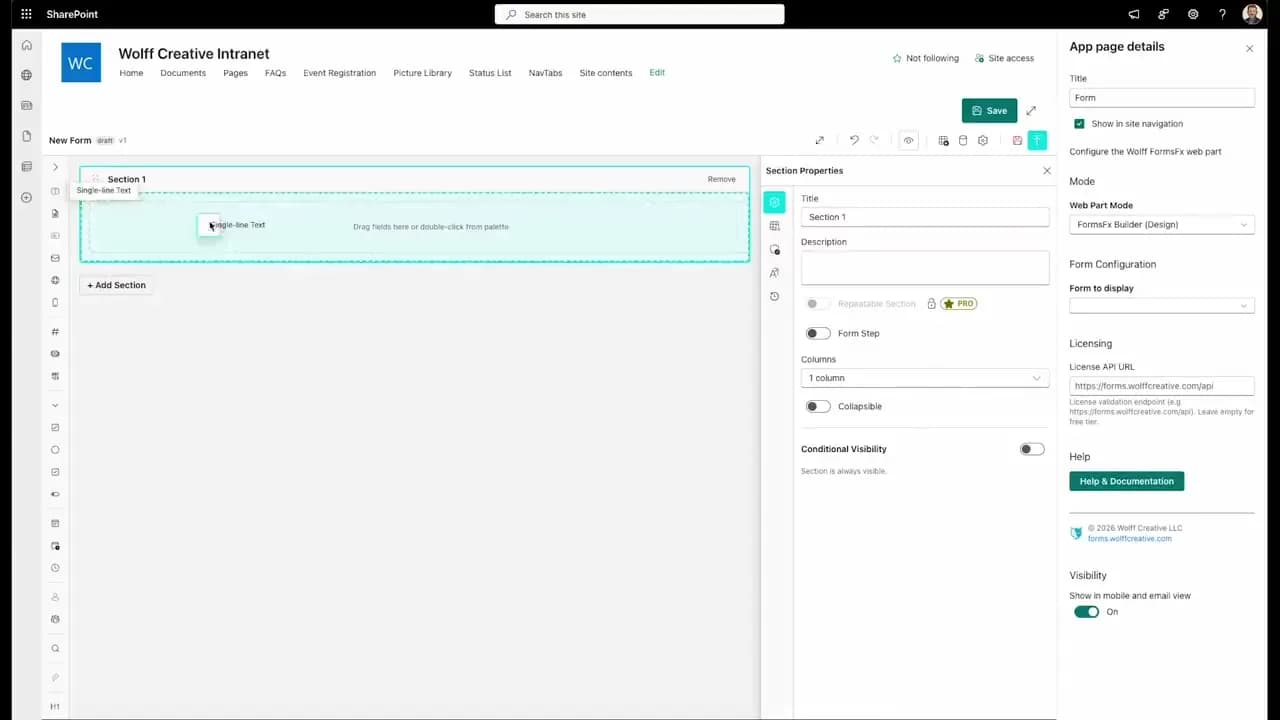
FormsFx: A Drag-and-Drop SharePoint Form Builder with Rules, Formulas, and Cascading Dropdowns
We built a SharePoint form builder that does what InfoPath did — conditional logic, calculated fields, cascading dropdowns — but runs natively as an SPFx web part. Here's how it works under the hood.
Read More →
FormsFx Has a Built-In Submissions Dashboard — Here's Why That Matters
Most SharePoint form builders stop at form submission. FormsFx includes a full dashboard for managing, searching, filtering, exporting, and approving submissions — no Power BI or custom views required.
Read More →
Offline Forms, Webhook Signatures, and Enterprise Connectors — FormsFx Beyond SharePoint Lists
FormsFx doesn't just write to SharePoint lists. It supports offline submission queuing, HMAC-signed webhooks for Power Automate, and enterprise connectors for SQL Server, Dataverse, REST APIs, and Azure Service Bus.
Read More →Need Help With This?
I help Eastern Shore businesses with web development, marketing, and AI automation. Let's talk about your project.
Need Help With Your Project?
Ready to take your business to the next level? Let's discuss how I can help.