You Know SEO — But What Is AEO?
SEO helps you rank. AEO helps you get recognized. Learn how Answer Engine Optimization helps your brand show up in ChatGPT, Gemini, and other AI search tools.
Most businesses today know they need SEO — Search Engine Optimization. But the game is changing fast. As more people turn to ChatGPT, Perplexity, Gemini, and AI search, a new acronym is taking over: AEO — Answer Engine Optimization.
If SEO helped you rank on Google, AEO helps you get mentioned by AI.
What Exactly Is AEO?
AEO stands for Answer Engine Optimization, and it's the art of making your business, brand, or content discoverable by AI-powered tools — not just traditional search engines.
Unlike Google, AI models don't return a list of blue links. They return answers. And those answers come from entities (brands, businesses, and people) they can verify and understand through structured data, reputation signals, and semantic content.
So instead of asking:
"How can I rank higher on Google?"
You need to start asking:
"How can I make sure ChatGPT, Gemini, or Perplexity mentions me when someone asks about my services?"
How AI Decides Who to Mention
Answer engines pull from a mix of:
- Structured data (Schema markup, Google Business, Crunchbase, etc.)
- Entity recognition (Your brand appearing across consistent sources)
- Authority + authenticity (Reviews, backlinks, social trust)
- Clear language (Content written to answer questions directly)
For example, when someone asks:
"Who are the best brand designers near Ocean City, MD?"
ChatGPT might look at:
- Yelp and Google Business data
- Your website's schema markup
- Mentions on LinkedIn, Clutch, or Medium
- Local content with natural language ("We're a Maryland-based design studio...")
If it can connect those dots confidently, you're in the answer.
SEO vs AEO (in plain English)
| SEO | AEO | |
|---|---|---|
| Goal | Rank in Google search results | Be cited or described in AI answers |
| Audience | Humans searching with keywords | AI models interpreting entities |
| Core Signal | Keywords, backlinks, meta tags | Structured data, authority, trust |
| Main Platforms | Google, Bing | ChatGPT, Gemini, Perplexity, Copilot |
| Content Style | Blog posts, landing pages | Conversational, question-based content |
| Outcome | Traffic | Mentions + visibility in AI summaries |
How to Optimize for AEO (Starting Today)
Here's what to do right now:
-
Add Schema Markup to Your Site Use
JSON-LDto describe your business, services, and location (so AI can identify you as an entity). -
Claim & Optimize Profiles Across Key Platforms Google Business, Yelp, Crunchbase, LinkedIn, Clutch, Apple Maps, Bing Places. These structured sources are where AI engines look first.
-
Write Conversational Content Use question-based headlines and natural answers. Example:
- "Who are the best logo designers in Maryland?"
- "What does a Power Apps consultant actually do?"
-
Be Consistent Everywhere Your name, address, and descriptions should match exactly across the web.
-
Build Local & Niche Authority Encourage reviews, share case studies, and get mentioned in relevant directories.
The Future of Search Is Conversational
We're entering the "post-SEO" era. Instead of optimizing for clicks, we're optimizing for answers — the ones people hear first when they ask an AI tool for help.
If your brand isn't structured, recognized, and trusted, it won't be found — even if your SEO is strong.
AEO is how your brand speaks to AI.
TL;DR
SEO helps you rank. AEO helps you get recognized. Make your business a trusted, structured entity across the web — and you'll show up when people ask AI for answers.
Written by: Kevin Wolff, Founder of Wolff Creative Brand design, digital strategy, and Power Platform solutions for forward-thinking businesses. www.wolffcreative.com
Tags

About Kevin Wolff
Kevin is a web developer and digital strategist based in Ocean City, MD. He specializes in creating modern websites, SharePoint solutions, and digital marketing strategies that help businesses grow online.
Free: AI Readiness Checklist
Subscribe and instantly download our 15-question checklist to discover where AI automation can save you time and grow your business.
Related Articles
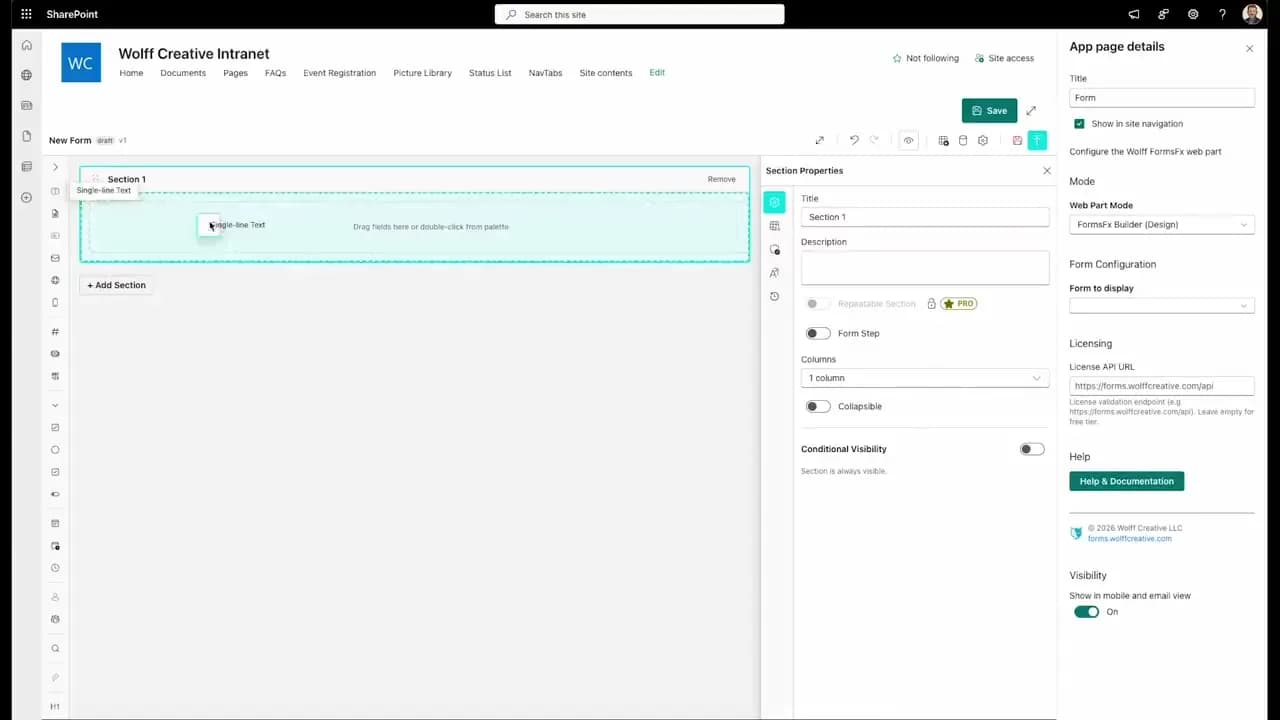
FormsFx: A Drag-and-Drop SharePoint Form Builder with Rules, Formulas, and Cascading Dropdowns
We built a SharePoint form builder that does what InfoPath did — conditional logic, calculated fields, cascading dropdowns — but runs natively as an SPFx web part. Here's how it works under the hood.
Read More →
FormsFx Has a Built-In Submissions Dashboard — Here's Why That Matters
Most SharePoint form builders stop at form submission. FormsFx includes a full dashboard for managing, searching, filtering, exporting, and approving submissions — no Power BI or custom views required.
Read More →
Offline Forms, Webhook Signatures, and Enterprise Connectors — FormsFx Beyond SharePoint Lists
FormsFx doesn't just write to SharePoint lists. It supports offline submission queuing, HMAC-signed webhooks for Power Automate, and enterprise connectors for SQL Server, Dataverse, REST APIs, and Azure Service Bus.
Read More →Need Help With This?
I help Eastern Shore businesses with web development, marketing, and AI automation. Let's talk about your project.
Need Help With Your Project?
Ready to take your business to the next level? Let's discuss how I can help.